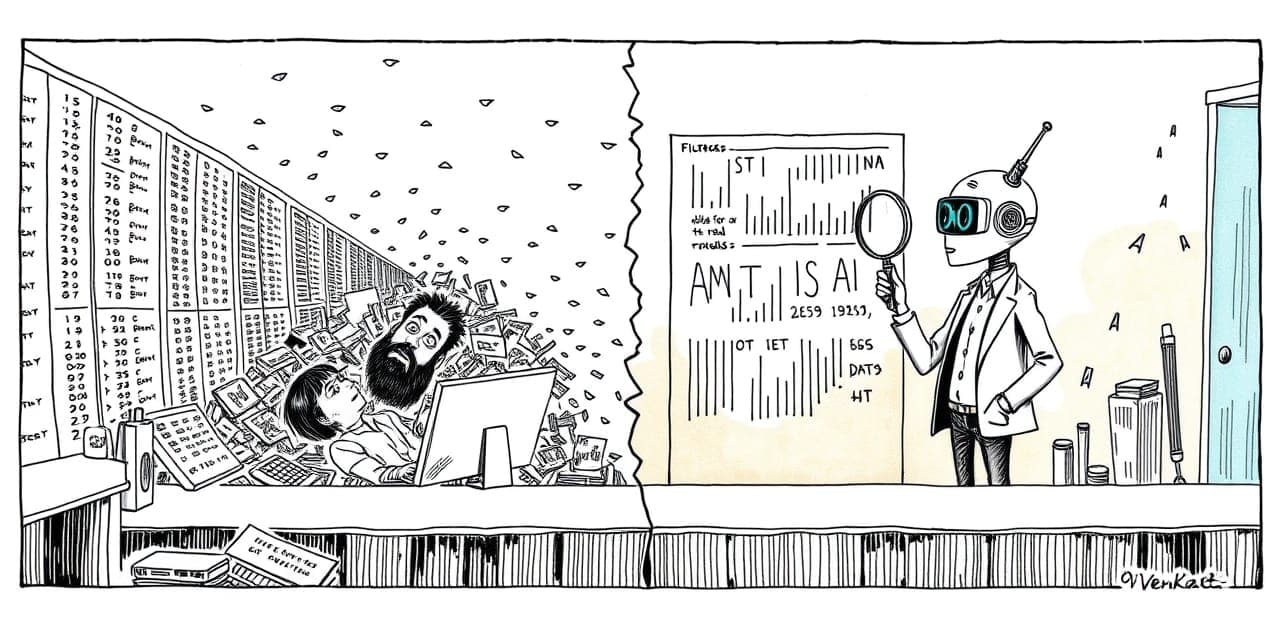

Finding Stocks Is Easy. Keeping Your Gains Is Hard.
Retail investors in India spend an enormous amount of time on stock discovery. They compare Tickertape AI features, test screeners on Screener.in, build watchlists, follow tip channels, and obsess over which stock to buy next. The tools for finding stocks have never been better. Tickertape alone lets you filter the entire NSE universe by hundreds of fundamental and technical parameters, score stocks with proprietary metrics, and build custom screens in minutes.
And yet, retail investors keep losing money.
The SEBI study from January 2023 made this painfully clear: 89% of individual F&O traders incurred losses over a three-year period. These traders had access to the same screeners, the same data, the same AI-powered stock discovery tools as everyone else. The stocks they found were not the problem. What they did after finding them was.
"Stock selection accounts for a fraction of your returns. Position sizing, timing, and emotional control account for the rest."
This is the gap that most investors don't see. They invest hours into the what to buy question while ignoring the how you trade question entirely. That second question is where most of the money is lost, and it's the question that no screener is designed to answer.
What AI Stock Screeners Do (Tickertape, Screener.in)
Stock screeners are research tools. They take the universe of listed stocks and help you narrow it down based on criteria you define. This is genuinely useful work, and tools like Tickertape and Screener.in do it well.
A screener starts with data: financial statements, price history, volume trends, analyst estimates. You set filters: PE ratio below 20, revenue growth above 15%, debt-to-equity below 1. The screener returns a list of stocks that match. More sophisticated screeners like Tickertape add proprietary scores, peer comparisons, and visual dashboards that make the research process faster.
- Fundamental screening: Filter by valuation, profitability, growth, and balance sheet metrics across thousands of stocks
- Technical screening: Scan for chart patterns, moving average crossovers, RSI levels, and volume breakouts
- Stock comparison: Side-by-side analysis of peers within a sector
- Watchlist management: Track stocks you're interested in and monitor for changes
Screeners operate on market data. They know everything about stocks. They know nothing about you. A screener can tell you that a stock has a low PE ratio and strong earnings growth. It cannot tell you that you've bought similar "value traps" six times before and lost money every time. It cannot see that you always panic-sell during dips. It has no idea that your portfolio is 60% concentrated in a single sector.
The screener's job ends the moment you hit the buy button. Everything that happens after that is outside its scope entirely: how long you hold, whether you average down recklessly, whether you overtrade after a winning streak.
What AI Companions Do (PortoAI)
An AI companion is not a research tool. It is a behavioral monitoring system that watches how you actually trade and intervenes when your patterns suggest you're about to make a costly mistake.
When you connect your broker accounts (Zerodha, Groww, or others), PortoAI reads your actual trade history. Not hypothetical trades, not paper portfolios, but the real decisions you made with real money. From this data, it builds a behavioral baseline: your typical trading frequency, average hold time, position sizing patterns, sector concentration, and win/loss distribution.
Then it watches for deviations.
- Overtrading detection: Flags when your trading frequency spikes above your baseline, often a sign of emotional trading
- Revenge trading alerts: Identifies when you're increasing position sizes immediately after losses, a pattern that compounds losses rapidly
- Concentration risk: Warns when your portfolio becomes dangerously weighted toward a single stock or sector
- Averaging down patterns: Detects when you're repeatedly adding to losing positions without a clear thesis
- Commission drag: Calculates how much of your capital is being eaten by trading costs, brokerage, STT, and GST
A screener answers: "Which stocks meet my criteria?"
A companion answers: "Am I trading in a way that's likely to lose money?"
These are fundamentally different questions. They use different data sources, different analytical methods, and they serve different moments in the investing process. A screener helps before the trade. A companion helps during and after.
Feature Comparison: Screener vs Companion
| Feature | AI Screener (Tickertape) | AI Companion (PortoAI) |
|---|---|---|
| Primary use case | Stock discovery and research | Trading behavior monitoring |
| Data source | Market data, financials, technicals | Your actual trade history |
| Alerts | Price targets, news, earnings | Behavioral pattern deviations |
| Behavioral analysis | None | Core function |
| Multi-broker support | N/A (not broker-connected) | Yes: Zerodha, Groww, and more |
| Portfolio tracking | Manual or limited | Automatic from broker data |
| Best for | "What should I buy?" | "Am I trading well?" |
This is not a ranking. These tools occupy different categories. Comparing them is like comparing a compass to a seatbelt: one helps you choose a direction, the other keeps you safe along the way.
Which Problem Are You Actually Trying to Solve?
Before adding another tool to your stack, ask yourself which question keeps you up at night.
If your primary struggle is stock selection (you don't know where to start, you can't evaluate fundamentals efficiently, or you want to discover small-cap opportunities you're missing), then a screener is what you need. Tickertape, Screener.in, and Chartink all serve this purpose well. Build your screens, do your research, and build a watchlist.
If you've done the research but your P&L still bleeds red, the problem is almost certainly behavioral. You know which stocks are good. You just can't stop yourself from overtrading them, holding losers too long, or letting one bad trade spiral into five. This is a companion problem, not a screener problem.
Here's the uncomfortable truth: stock picking is not where most retail investors lose money. The data consistently shows that losses come from how people trade, not what they trade. Overtrading, revenge trading, ignoring position sizing, panic selling during corrections. These behavioral patterns account for the vast majority of retail losses.
You can have the best screener in the world and still lose money if your trading behavior is working against you. A screener optimizes input. A companion optimizes execution. For most people, execution is the bottleneck.
The trickiest part of behavioral mistakes is that you can't see your own. You don't notice that you always buy high and sell low. You don't realise that your average hold time has dropped from weeks to hours. You genuinely believe each trade is rational in the moment, even when the aggregate pattern is clearly destructive.
This is why self-monitoring doesn't work. You need a system that tracks the data you won't track yourself, and surfaces it at the moments when it matters most.
The Case for Using Both
The best investors separate their process into two distinct phases: research and execution.
For research, use the best screening tools available. Tickertape gives you AI-powered stock scoring and comprehensive fundamental data. Screener.in offers excellent financial visualization and custom query capabilities. These tools help you build a high-quality watchlist of stocks worth owning.
For execution, connect your brokers to PortoAI. Let it monitor your actual trading patterns, flag behavioral deviations, and calculate the real cost of your trading habits. Use the behavioral fingerprint to understand where your process breaks down.
The combination is powerful: you make better stock selections and you execute on those selections without sabotaging yourself along the way.
This dual approach is especially critical for investors who:
- Trade actively across multiple brokers and need a unified view of their behavior
- Have struggled with consistency despite doing thorough research
- Want to understand why their paper portfolio outperforms their real one
- Are transitioning from trading to investing and need to break old habits
Research without discipline is wasted effort. Discipline without research is blind faith. You need both.
Connect your broker and see what your trading patterns reveal.
Try PortoAI FreeFrequently Asked Questions
Frequently Asked Questions
What is the difference between a stock screener and an AI companion?
A screener helps you find stocks based on filters like PE ratio, revenue growth, and technical indicators. It works with market data and answers the question "what should I buy?" An AI companion like PortoAI works with your actual trade history from connected broker accounts. It monitors your trading behavior (frequency, hold times, position sizing, concentration) and alerts you when your patterns suggest you're about to make a costly mistake. They solve fundamentally different problems.
Does Tickertape use AI?
Tickertape uses data-driven screening and proprietary scoring algorithms to help you discover and evaluate stocks. Its AI features are focused on stock analysis, filtering, and comparison. It does not connect to your broker accounts, does not monitor your trading behavior, and does not provide behavioral alerts. Tickertape is a research tool; it helps you decide what to buy, not how to trade.
Can I use both Tickertape and PortoAI?
Yes, and that is the recommended approach for serious investors. Use Tickertape to discover and research stocks: build screens, compare fundamentals, and create a high-quality watchlist. Then use PortoAI to monitor your actual trading behavior, track your portfolio across multiple brokers, and get real-time alerts when you're making behavioral mistakes like overtrading or revenge trading. Research and execution are separate problems that benefit from separate tools.