
₹52,704 crore. That is how much FIIs pulled from Indian equities in the first two weeks of March 2026.
You've been watching that number climb on Moneycontrol. Somewhere around ₹40,000 crore, the WhatsApp groups started filling with screenshots. At ₹50,000 crore, someone in your family said "arey, FIIs are running away, we should also get out."
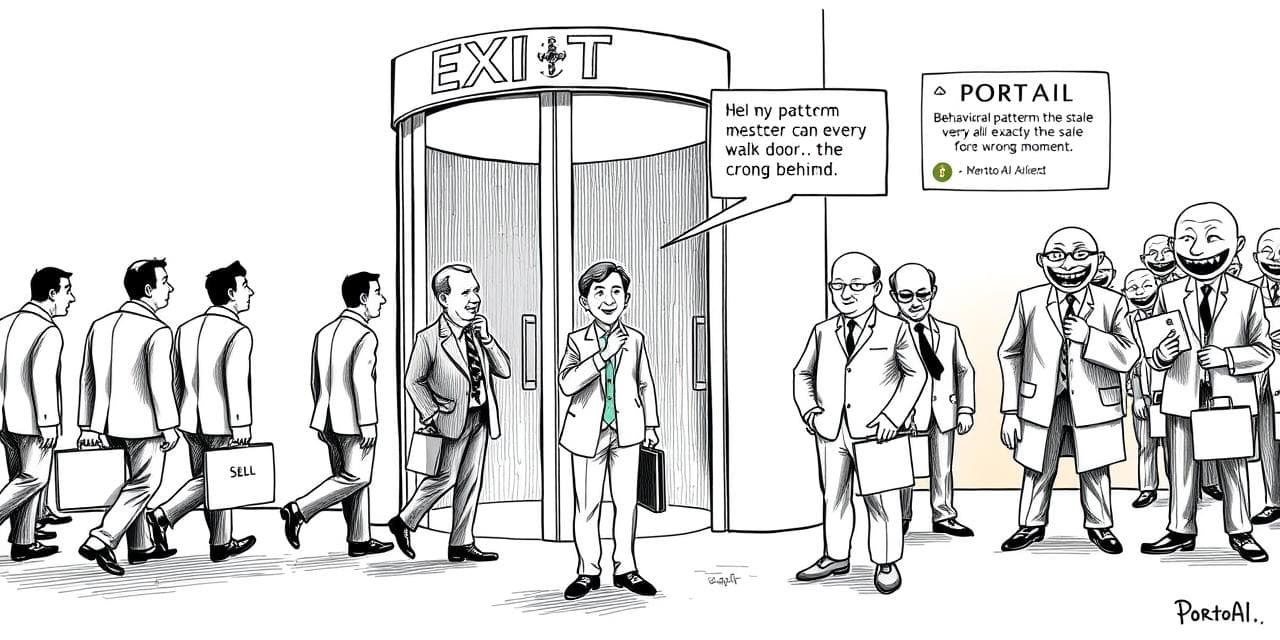
You are about to do exactly what FIIs expected retail India to do.
Why FIIs Are Selling Right Now
The mechanics are not complicated. On February 28, 2026, the US and Israel launched coordinated airstrikes on Iran. Iran responded by disrupting traffic through the Strait of Hormuz, which carries approximately 20% of global oil. Brent crude, which was at $73 in January, crossed $115 by March 9.
India imports 85% of its crude oil. A $40 rise in oil means higher inflation, a wider current account deficit, and pressure on the rupee. The rupee has fallen to ₹92.45 against the dollar, its worst level ever. FIIs saw all of this and did what their risk models told them to do: cut exposure to oil-importing emerging markets.
This is not a judgement on Infosys or HDFC Bank. FIIs are not selling because they've lost faith in Indian companies. They are selling because their portfolio allocation models treat India as riskier relative to US treasuries when crude is above $100 and the rupee is falling. They shift capital to safer dollar-denominated assets. It is mechanical. It is predictable. And it has nothing to do with your 15-year investment horizon.
No. A research study published in PMC examining FII trading behaviour in Indian markets from 2002 to 2021 found that FII flows are driven predominantly by global macro factors and US dollar strength, not by India-specific earnings or growth signals. In seven out of ten major FII sell-off episodes studied, the selling preceded no meaningful deterioration in Indian corporate earnings.
The pattern repeats because it is structural. FIIs sell India when the dollar strengthens, when oil spikes, when US yields rise, and when global risk-off sentiment peaks. India's Nifty earnings can be growing at 15% and FIIs will still reduce India exposure if the US 10-year yield crosses 5% and crude crosses $100. Both of those things are true right now.
What Domestic Investors Are Actually Doing
Here is the number your WhatsApp groups are not sharing.
As of March 13, 2026, while FIIs were selling ₹52,704 crore, domestic institutional investors (DIIs), primarily mutual funds, insurance companies, and pension funds, were net buyers. NSE's daily FII/DII data shows that on every session where FIIs sold ₹3,000-4,000 crore, DIIs were typically buyers of ₹2,000-3,500 crore. The net outflow is real. The narrative that everyone is fleeing is not.
The systematic investment plan (SIP) book, which crossed ₹25,000 crore per month in 2025, keeps buying automatically at lower NAVs. Every market fall during an FII exodus actually means the SIP book acquires more mutual fund units per rupee deployed.
This structural shift matters more than most retail investors appreciate. Pre-2015, FII selling could push Indian markets into freefall because there was limited domestic buying power to absorb it. Today, India's mutual fund industry manages over ₹55 lakh crore in assets. Domestic capital depth has permanently changed the equation. The FII exit that would have caused a 30% crash in 2005 causes a 5-7% correction in 2026.
DIIs, particularly LIC and major fund houses, have India-specific mandates tied to domestic growth and long-term return targets. They are not rebalancing to US treasuries because oil crossed $100. Their buying during the sell-off reflects institutional conviction that Indian equity valuations at these levels are attractive for a 5-10 year horizon.
The FII versus DII split is a data point, not a buy signal. But it does tell you that not all large-money participants agree that Indian equities should be sold right now. The FII selling is front-page news. The DII absorption is a footnote.
What Happens When Retail Follows the FII Trade
This film has been shown four times in the last 20 years. The ending is always the same.
2008 Financial Crisis. FIIs sold over $12 billion from Indian equities between January and October 2008. Retail panic followed. Nifty fell from 6,288 to 2,252. FIIs started returning in March 2009. Retail investors who had sold were watching headlines for an "all-clear" that never came. By the time retail returned in bulk in 2010, Nifty had already recovered past 5,000.
2013 Taper Tantrum. The US Federal Reserve signalled it would reduce bond purchases. FIIs pulled $4 billion from India in three months. Retail sold. The rupee crashed to ₹68. Within six months, FIIs returned. Retail investors who had exited missed a 30% recovery.
2020 COVID. FIIs sold ₹65,816 crore in March alone, the sharpest single-month outflow in NSE history at the time. Retail panic was extreme. Nifty hit 7,610 on March 24, 2020. FIIs started buying back by April. By October 2020, Nifty was at 11,900. Investors who followed FIIs out in March bought back in June at 10,000+.
2022 Russia-Ukraine. FIIs sold ₹1.4 lakh crore between October 2021 and June 2022. Retail followed, redeeming equity mutual funds at scale. Nifty fell 15%. By November 2022, FIIs returned and Nifty crossed 18,000.
Every episode has the same structure. FIIs sell because of a macro trigger. Retail follows, later, at lower prices. FIIs return when the trigger eases. Retail buys back, later still, at higher prices.
The investor who followed FIIs out during COVID at Nifty 7,610 typically re-entered in June at 10,000. The investor who stayed bought at 7,610-level NAVs and watched them triple. The difference is not intelligence or market knowledge. It is the decision to not follow an institutional trade that was already done by the time it appeared in your news feed.
Why Your Portfolio Is Not an FII's Book
An FII managing a global emerging markets fund has a 3-6 month risk horizon and a mandate to outperform a benchmark that rebalances quarterly. When macro risk rises, their risk model demands they cut India exposure. They do not have the option to ignore the macro signal and hold. Their own investors will redeem units if they don't respond.
Your situation is different in every dimension. You are not answering to a quarterly benchmark. Your horizon is your own financial goals: retirement in 15 years, a child's education in 8 years, a home purchase in 5 years. Your cost of acquisition is lower than the FII's exit price. You pay no capital gains tax until you actually sell.
The FII has a structural reason to sell on macro risk. You do not.
When you sell because FIIs are selling, you're adopting a mandate that doesn't match your situation, time horizon, or tax position. You're turning a 15-year investment into a 3-month trade. And you're executing it at the worst possible price: the point where FII selling has already depressed the market, but before DII and FII buying has started to recover it.
PortoAI's behavioral fingerprint tracks whether your trading patterns show herd behaviour: selling spikes that cluster on high-FII-exit days, buying patterns that follow institutional flow data rather than your own investment thesis. If your Zerodha or Groww order history shows you consistently exiting when FII headlines peak, that pattern has a specific rupee cost that shows up in your XIRR.
The Actual Cost of Following the Exit
Make the number concrete. Assume you held a ₹10 lakh equity portfolio on March 1, 2026, before the crash. By March 14, after Nifty fell 5.7%, your portfolio was worth approximately ₹9.43 lakh.
Scenario A: You hold. Markets recover in 4-6 months, consistent with every geopolitical crisis recovery in the last 30 years. Your portfolio returns to ₹10 lakh and continues compounding.
Scenario B: You sell at ₹9.43 lakh. You crystallise a ₹57,000 loss. You pay short-term capital gains tax if held under a year. You wait for the "right time" to re-enter. Markets bottom at a point you cannot identify in real time, recover 15%, and you re-enter when recovery feels "confirmed." Your effective re-entry is at ₹9.80 lakh equivalent. Your compounding clock resets from a lower base.
The cost of following the FII trade is not only the 5.7% drawdown. It is the mistimed re-entry, the transaction costs, the STCG tax, and the psychological pressure to wait for certainty that always arrives after recovery has started.
SEBI's 2024 study on equity derivatives losses identified reactive trading on macro news as a significant contributor to retail losses. Selling on FII data headlines falls directly in this category.
What Should You Actually Do Right Now?
Not sell. That part is established.
But "don't sell" is only useful if it's paired with a rational framework for what to do instead.
Check your concentration, not your total return. The right question right now is not "am I down 5.7% like the Nifty?" It is "am I down 10% because I was overweight IT and banking, the sectors FIIs hold most heavily?" PortoAI's sector concentration analysis shows your actual exposure. If your portfolio fell more than the Nifty, that is a concentration problem to address, not a selling trigger.
Check whether your SIPs are running. Do not stop them. The case for continuing SIPs during a geopolitical crash is unambiguous from the data. At current NAV levels, your monthly SIP is buying more units than it did in January. That is exactly the mechanism working in your favour.
Check if any selling trigger comes from your own data. Not from FII flow numbers. Not from Moneycontrol alerts. From your specific situation: a goal-based rebalancing need, a tax-loss harvesting opportunity, or a position whose underlying thesis has genuinely changed. PortoAI's portfolio analysis shows your XIRR including recent NAV changes and your actual sector distribution, so any decision is based on your numbers, not the news cycle.
If you're also tempted to buy the dip, read what India VIX at 23 is actually telling you about the quality of dip-buying decisions first. Adding diversification during a crash is rational. Doubling down on your existing concentrated losers is not.
The one question that cuts through the noise: is your investment horizon 3 months or 15 years?
If 15 years, the FII exit number is noise. Act accordingly.
Check whether your portfolio is set up to weather FII sell-offs or amplify them. PortoAI connects to your Zerodha or Groww account and shows your sector exposure, behavioral patterns, and what the data says about your last 12 months of trading decisions.
Try PortoAI FreeFrequently Asked Questions
Why are FIIs selling Indian stocks in March 2026?
FIIs are selling because of global risk-off mode triggered by the Iran war, crude oil above $110, a weaker rupee, and rising US yields. This makes emerging markets like India less attractive to global funds. FII selling is a mechanical response to macro risk, not a judgement on Indian corporate fundamentals.
Should retail investors sell when FIIs are selling Indian stocks?
The historical record says no. In every major FII exodus from India, including 2008, COVID 2020, and Russia-Ukraine 2022, retail investors who sold during the FII exit bought back at higher prices during the recovery. FIIs return when risk appetite improves. Retail investors who followed them out missed the first 15-20% of the recovery, which is always the sharpest move.
What happens to the Indian stock market when FIIs sell heavily?
Short-term: markets fall, the rupee weakens, volatility rises. The FII sell-off amplifies sentiment. However, domestic institutional investors and retail SIP flows have historically absorbed the selling pressure. In March 2026, DIIs have been net buyers even as FIIs sold ₹52,704 crore.
When do FIIs come back to India after a big sell-off?
FIIs return when the macro uncertainty resolves: when the war stabilises, crude falls, the rupee stabilises, or US rates peak. Historically, the return has been within 3-6 months of the major risk event. FIIs came back to India within 6 months of COVID, Russia-Ukraine, and the 2013 taper tantrum. The return is sharp and happens before retail investors expect it.
What is the difference between FII selling and DII buying in India?
FIIs are global funds that shift capital between markets based on macro conditions. DIIs like LIC, SBI MF, and HDFC AMC have mandates tied to India's long-term growth. In March 2026, DIIs have been consistently buying what FIIs sell, reflecting domestic institutional confidence in Indian equity valuations at current levels.
How can I check if my portfolio is exposed to FII-sensitive sectors?
PortoAI's portfolio analysis shows your sector concentration and flags overexposure to FII-heavy sectors like IT, banking, and large-cap defensives. During FII sell-offs, these sectors fall harder than the broader market because FIIs hold them in higher proportions. Knowing your actual exposure tells you whether this crash matters for your specific portfolio or just for the index.