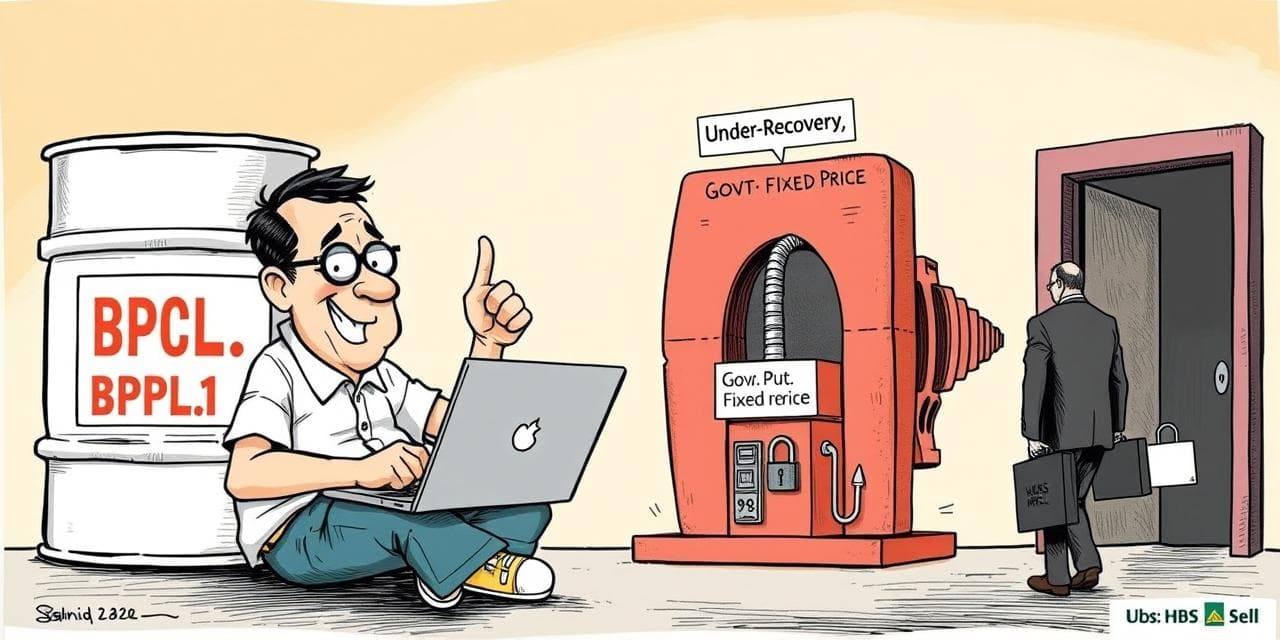

You saw the number this morning. Brent crude: $100.18. Nifty: down 1,240 points. BPCL: ₹309.70, down from ₹345 yesterday.
You opened Zerodha. You found BPCL in the watchlist. The reasoning formed itself in about four seconds: oil price up, oil company stock down, that's irrational, this is a buying opportunity.
Three investors out of five reading this will have had exactly that thought. PortoAI's transaction data from the last two weeks, as crude moved from $80 to $100, shows accumulation in BPCL and HPCL specifically among retail accounts that did not own them before. The logic feels airtight.
The logic is wrong.
Why Is BPCL Falling When Oil Prices Are Rising?
BPCL is not an oil company in the sense that phrase implies for global markets.
ExxonMobil, Saudi Aramco, Shell: these are upstream producers. When crude oil prices rise, they earn more revenue per barrel they pump out of the ground. Higher crude = higher profit. The intuition works for them.
BPCL, HPCL, and IOC are downstream refiners and fuel retailers. They buy crude at the international price. They refine it into petrol, diesel, kerosene, and LPG. Then they sell it at the pump.
The pump price is not set by BPCL. It is set by the government of India.
This is the critical piece most retail investors do not know or do not remember when they see a falling stock and a rising commodity. When Brent crude was at $75 a barrel, BPCL's refining margins were healthy. When crude hits $100, BPCL's cost of buying crude jumps 33%. The price they can sell petrol for does not jump 33%. It may not move at all, depending on the political environment.
The gap between what BPCL pays for crude and what it earns from selling fuel narrows. In a severe oil shock, that gap goes negative. This is called under-recovery: BPCL is literally losing money on every litre it sells.
Business Standard reported in March 2026 that OMC stocks HPCL, BPCL, and IOCL cracked up to 19% in the month as crude crossed $100, with UBS downgrading HPCL to 'Sell' and cutting its target price from ₹540 to ₹340.
The market is not being irrational. It is pricing in earnings destruction that is fully predictable from the cost structure of these companies.
Who Actually Benefits When Crude Hits ₹100 in India?
The retail investor's instinct to "buy oil stocks during an oil shock" is correct in concept but wrong in execution for India. The right question is: which Indian companies are upstream, not downstream?
ONGC: Produces crude oil from its own fields. When Brent crosses $100, ONGC earns more per barrel extracted. It is not exposed to retail fuel price controls in the same way because it sells crude, not petrol. Higher crude is directly good for ONGC's top line.
Oil India: Same mechanism as ONGC, smaller scale. Upstream producer, beneficiary of high crude prices.
Reliance Industries: More complex because it operates both upstream (through its stake in US shale assets and KG basin) and downstream (Jamnagar refinery). Reliance's refinery is privately owned and not subject to the same price control constraints as BPCL. It exports a significant share of refined products at international market prices, which means it can capture refining spreads even in a high-crude environment.
The losers, specifically, in an Indian oil shock:
- BPCL, HPCL, IOC (margin compression from under-recovery)
- IndiGo and SpiceJet (aviation fuel is their largest operating cost, it just got 30% more expensive)
- Asian Paints and Berger Paints (petrochemical derivatives are raw materials)
- Tyre companies like MRF and Apollo Tyres (crude derivatives in raw material costs)
- Any logistics company with high diesel consumption: Blue Dart, Delhivery
Your portfolio may hold several of these. The oil shock does not hit you once. It hits you from multiple directions simultaneously.
The Behavioral Pattern PortoAI Sees Every Time Crude Spikes
This is not the first time Brent crude has spiked past $90 during PortoAI's operating history. The behavioral pattern in retail portfolios repeats with enough consistency that it warrants naming.
Phase 1 (crude crosses $85-90): Retail accounts begin reducing aviation and paints exposure. Reasonable sector rotation.
Phase 2 (crude crosses $95): BPCL and HPCL start appearing in retail buy orders. The "oil company cheap on dip" narrative takes hold on Twitter, YouTube finance channels, Telegram groups.
Phase 3 (crude crosses $100): Retail accumulation in BPCL and HPCL accelerates precisely as institutional money exits. UBS downgraded HPCL to Sell and BPCL to Neutral, with Goldman and domestic fund houses also cutting targets. Retail and institutional money are moving in exactly opposite directions.
Phase 4 (first government statement on fuel prices): If the government signals no immediate price hike (politically difficult near elections), OMC stocks fall another 5-10% in a single session. Retail accounts that averaged down are now sitting on 15-20% losses in positions they built over two weeks.
This is the averaging down trap in a sector-specific form. You are not averaging down on a fundamentally sound company that fell for unrelated macro reasons. You are averaging down on a company whose earnings are structurally compressed by the same macro factor that caused the "dip" you are buying.
PortoAI's behavioral fingerprint analysis flags this pattern specifically: when a user's buy orders in a position increase as the stock falls and the underlying commodity causing the fall continues rising, it is not conviction investing. It is anchoring to a purchase price and refusing to acknowledge that the fundamental thesis was incorrect.
Your Portfolio's Hidden Oil Sensitivity
Most investors think of oil exposure as: "Do I own BPCL or HPCL?" If the answer is no, they consider themselves unexposed.
This is wrong.
India imports 85% of its crude oil needs, with roughly half of that supply transiting through the Strait of Hormuz according to Bloomberg's analysis of India's oil shock exposure. Every business that consumes energy, uses petrochemical derivatives, or depends on logistics is indirectly exposed to crude. A ₹100 oil price is an invisible tax on consumption, production, and margins across the economy.
PortoAI's sector concentration analysis does not just look at your declared holdings in energy stocks. It maps the underlying crude sensitivity of every company in your portfolio:
- FMCG companies: packaging (petrochemicals), logistics (diesel), raw materials (palm oil, which moves with crude). Not immune.
- IT companies: operationally mostly insulated. Genuine defensive in an oil shock, which is why Nestlé and HUL held up while the rest fell today.
- Banks and NBFCs: exposed indirectly through credit quality of oil-sensitive borrowers and inflationary pressure on rate cycle.
- Cement: energy is 30-35% of cement production cost. Crude indirectly moves coal, which moves cement input costs.
When crude goes from $75 to $100, there is almost nowhere to hide in the Indian market except IT, pharmaceuticals, and select FMCG. The retail instinct to rotate into "oil stocks" during this period is the opposite of what the data supports.
Is There Any Scenario Where BPCL or HPCL Makes Sense Right Now?
One scenario exists: if the government announces a significant petrol and diesel price hike within the next 30-60 days, OMC under-recovery reduces sharply and margins recover. This has happened before. After crude spikes, the government has historically raised prices once the political environment allows.
Three things make this scenario less likely in March 2026. Bihar state elections are less than five months away. The Union Budget 2026 did not signal any fuel price normalisation. And the Iran conflict timeline is uncertain: no government raises fuel prices into a geopolitical crisis if they can avoid it.
If you believe crude will fall back below $85 within two months, buying OMC stocks may be rational. But that is a crude oil call, not an equity call. You are essentially betting on when the Iran conflict de-escalates, which is not a trade most retail investors have any edge in making.
The stocks may look cheap at 19% off their February highs. The XIRR on an averaging-down strategy when the underlying thesis is wrong is rarely what the investor expects.
What Should You Actually Do Right Now?
Three specific actions, not generic advice.
First: Run the oil sensitivity check on your full portfolio before touching any energy names. If your portfolio already contains IndiGo or SpiceJet, paints, chemicals, or logistics companies, you are already more oil-exposed than you realise. Adding OMC positions compounds correlated risk rather than providing an offset.
Second: Understand the OMC under-recovery math before any buy decision. At $100 crude, BPCL loses approximately ₹4-6 per litre on diesel marketing if prices stay frozen. On volumes of 35+ million metric tonnes annually, that is an earnings hit measured in thousands of crores per quarter. This is not a "temporary dip." It is an ongoing cash drain.
Third: If you are using PortoAI's portfolio analysis, check the sector correlation matrix during the current crash. The dashboard's behavioral fingerprint section shows whether your buy-side activity in the past 10 days follows an averaging-down pattern in correlated positions, which is one of the most consistent predictors of underperformance in concentrated retail portfolios.
The broader behavioural lesson from today is simpler than the mechanics of under-recovery: when a stock falls sharply and you feel an immediate urge to buy, verify the reason for the fall before you act. If the same factor that drove the stock down is still present and intensifying, the "dip" is not a dip. It is the market repricing future earnings in real time.
Sometimes the obvious trade is obvious because everyone makes it. That is rarely why it works.
Connect your Zerodha or Groww account to PortoAI and see your portfolio's actual crude oil sensitivity, across direct and indirect holdings.
Try PortoAI FreeFrequently Asked Questions
Why is BPCL falling when oil prices are rising?
Indian oil marketing companies like BPCL and HPCL buy crude at international market prices but sell petrol and diesel domestically at government-regulated prices. When crude spikes, their input costs jump immediately. Their selling prices cannot rise as fast. The margin between buying crude and selling fuel shrinks, sometimes turning negative. This is called under-recovery, and it destroys earnings. Higher oil prices mean more under-recovery, not more profit.
Which Indian stocks actually benefit from high crude oil prices?
Upstream producers benefit: ONGC and Oil India produce crude and sell it at international prices, so a ₹100 crude price directly improves their revenue per barrel. Reliance Industries benefits through its integrated refining operations, which can capture refining spreads even in a high-crude environment. These upstream players earn more when crude rises. OMCs (BPCL, HPCL, IOC) are the opposite: they are downstream refiners and fuel marketers hurt by margin compression.
Should I buy BPCL or HPCL shares when crude oil is at $100?
At ₹100+ crude, OMC earnings are under severe pressure unless the government raises petrol and diesel prices or provides direct subsidy. UBS downgraded HPCL to Sell and BPCL and IOC to Neutral specifically because of this mechanism. Buying because a stock looks cheap after a 15% fall without understanding why it fell is averaging into a structural problem, not buying a bargain.
What is under-recovery in Indian oil marketing companies?
Under-recovery is the difference between the international market price at which an OMC would normally sell a fuel and the government-mandated price at which it actually sells. When Brent crude is at $100, refining petrol costs more than what BPCL can sell it for at the pump. That gap is the under-recovery. The government may or may not compensate OMCs for this gap through subsidy, but until resolved, OMC profitability takes a direct hit every day crude stays elevated.
How does the Iran war affect Indian oil stocks differently from global stocks?
For global oil companies like ExxonMobil or Saudi Aramco, high crude prices generally mean higher profits because they are primarily upstream producers. For India's OMCs, the opposite is true because India has government-controlled retail fuel pricing. The Iran war impact is uniquely negative for downstream refiners: they face higher input costs with restricted ability to raise output prices. This is why OMC stocks have fallen 14-19% in March 2026 even as global energy companies gained.
Can PortoAI detect if my portfolio is overexposed to oil-sensitive sectors?
Yes. PortoAI's sector concentration analysis tracks the actual crude sensitivity of your holdings across direct exposure (OMC stocks, aviation, paints, chemicals) and indirect exposure (any company with high logistics or energy input costs). When crude spikes, the dashboard flags portfolios where multiple holdings are correlated to the same underlying risk factor, even if those holdings appear to be in different sectors in standard classification.